
Michelin reduces time-to-market from 2 weeks to 5 minutes in online retail.
How Michelin centrally manages product content with loadbee, accelerates distribution, and simplifies collaboration with retail platforms.
Two weeks. That’s how long it used to take for a new ADAC test result to appear on Michelin’s product pages across retailers. Two weeks in which customers saw outdated information—or none at all.
Today: 5 minutes. What changed is not just a technical upgrade. It’s a shift from decentralized dependency to centralized control.
Premium Tires for Safety and Quality
Michelin is one of the world’s largest tire manufacturers, headquartered in Clermont-Ferrand. The company produces tires for passenger cars, motorcycles, and commercial vehicles, and has stood for decades for durability, road safety, and technological precision – from wet braking distances to rolling resistance values and noise ratings.
In the German market, Michelin is represented on numerous major platforms – from specialist tire shops to marketplaces and price comparison portals.
Thomas Auer has been E-Retail Manager at Michelin for over 13 years and knows the challenge first-hand: tires are among the most explanation-intensive products in e-commerce. Braking performance, tread life, sustainability, EU label, test results – all of these determine whether a buyer makes the right choice.
“The products need to be explained as thoroughly as possible – especially because we operate in the premium segment.” — Thomas Auer
Many Retailers, Many Processes – Limited Control Over Timing
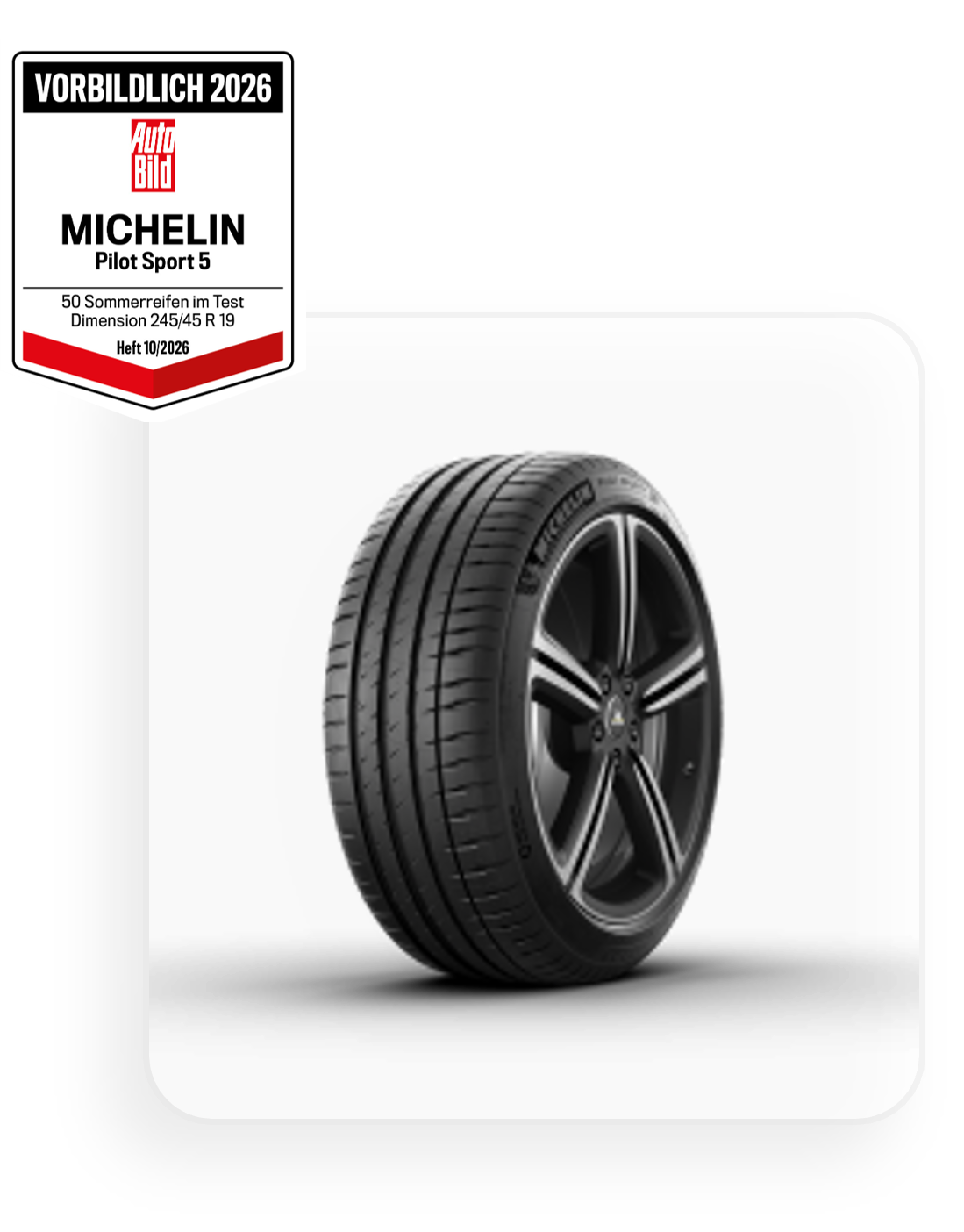
Tires are a considered purchase – not an impulse buy. Anyone facing a buying decision is looking for answers: Does this tire fit my vehicle? How did it perform in the ADAC test? Does it have the right speed or load index? These questions decide the sale – and that is precisely why up-to-date content is not a nice-to-have for Michelin, but the most important sales driver.
Before loadbee, Michelin had no direct way to distribute this content to retailers. Each platform had its own workflows, its own contacts, its own internal processes. What sounded simple turned into a permanent coordination project in practice.
“You have ten retailers – and each one does it in a different way.” — Thomas Auer
According to Thomas Auer, independent tests, customer reviews, and brand trust are the three key purchasing drivers in the tire segment.
This was particularly painful when it came to test results. When a new ADAC or TÜV test result was published, Michelin wanted this seal of approval to be visible on product pages as quickly as possible. Instead: Contacting individual representatives. Sending content via email. Waiting for internal approvals from the retailer. The typical lead time until going live: ~2 weeks. All updates were dependent on the retailer’s timeline.
“There’s always a delay—and you don’t have it under your control.” — Thomas Auer
The result: customers ready to buy right now saw outdated content – or none at all. In the automotive sector, where safety and trust drive purchasing decisions, that is a significant shortcoming.
Central Control Instead of Individual Coordination
With loadbee, Michelin prepares content centrally and distributes it to multiple retailers simultaneously – automated across 39 platforms. Content is delivered automatically to the retailers’ product detail pages – without manual coordination rounds, without email back-and-forth. Michelin works closely with an agency that structures and prepares the content. The operational overhead of coordinating with individual retailers is eliminated.
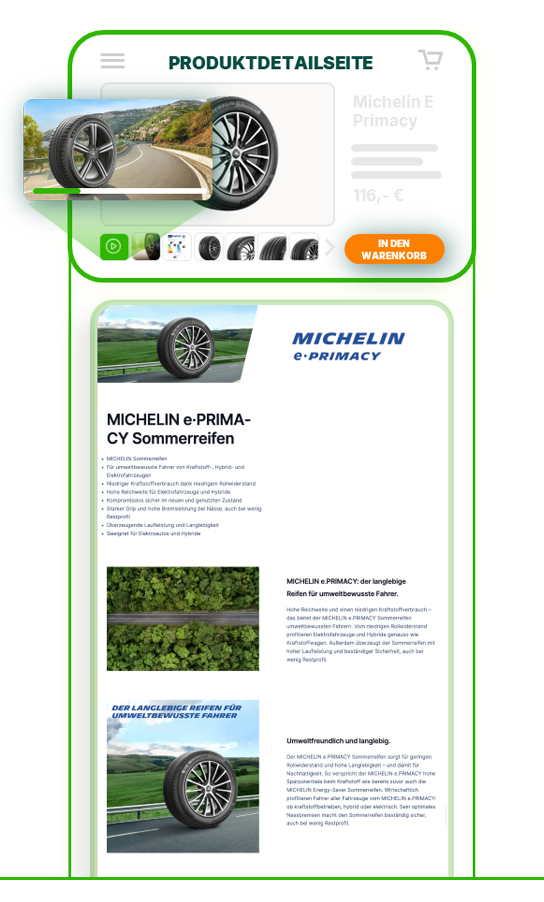
Speed, in particular, fundamentally changed the way Michelin works. A new test seal? Previously ~2 weeks. Today: 5 minutes.
In the automotive segment, where test results influence purchasing decisions, the timing of visibility can make all the difference.
“How quickly and easily can you publish content—and how quickly can you update it? That’s really strong.” — Thomas Auer
Two dimensions matter most to Michelin: publishing new content faster and updating existing content with ease. Together, they simplify ongoing maintenance considerably.
We decide what we show. We decide when we show it.
Time-to-Market Significantly Reduced
Operational: Content can now be published and updated almost immediately. New test results, updated EU labels, seasonal changes – all of it goes live within minutes. The administrative effort of coordinating with individual retailers has decreased significantly.
“loadbee makes it much easier for us to work with major platforms—because we’re faster and have more control.” — Thomas Auer
Commercial: An A/B test over three months compared product pages without prepared content against pages showing structured Premium Content (A+). The result: approx. +10% conversion uplift.
Thomas Auer frames this deliberately in measured terms: the difference arose between no content at all and prepared content. Not an isolated loadbee effect – but proof of what happens when product information – braking performance, test results, EU labels – is visible at the right moment.
In the automotive sector, nobody buys on impulse. But those who find the right information are more likely to buy.
“More content—especially up-to-date content—can’t hurt.” — Thomas Auer
Structure, Speed, Control
For Michelin, it is less about a single KPI than about a structural advantage: anyone operating within a decentralized retailer network loses time – because every partner has its own rhythms, its own processes, its own priorities. loadbee pulls control back to the brand.
In the automotive sector, up-to-date information is a decisive purchasing argument. Whoever distributes test results too late loses the buyer at exactly that moment. Central control gives the brand back its authority over what appears on product detail pages – and thereby over a significant part of the customer journey.
The test shows: the difference between no content and prepared content is measurable. The next question is how much potential lies in keeping that content consistently up to date.
Show more case studies